How to Keep a Conversation Going | SLIDD AI
How to Keep a Conversation Going (When She's Going Quiet)
Learning how to keep a conversation going matters most right after she sends a one-word reply. Between message 4 and message 8, most text threads die — not from bad looks or bad openers, but from a moment of register mismatch with no move ready for it. This is the playbook for that window.
Key Takeaways
- Conversations die in predictable stages, and the recovery window is 2–8 messages in — not after she's ghosted
- Tone switching (Witty → Sincere → Bold) prevents "same guy" fatigue that kills long exchanges
- Short replies don't mean disinterest — they usually mean your last message gave her nothing to work with
- Timing matters more than message length — a quick witty one-liner beats a paragraph of effort
- SLIDD eliminates the 30-second freeze that kills replies; every conversation can be kept alive if you remove the anxiety
Contents
- What Are the Stages of a Text Conversation That Works?
- What Makes a Conversation Die?
- How to Keep a Conversation Going Without Looking Desperate
- How Do You Respond When She Gives Short Replies?
- Does Your Tone Matter More Than What You Actually Say?
- What's the Best Way to Switch Up Momentum Mid-Conversation?
- How Long Should You Wait Before Texting Again?
- The SLIDD Advantage
- Can an AI Keyboard Actually Help?
- FAQ
What Are the Stages of a Text Conversation That Works?
Most text conversations move through four stages. The critical variable isn't which stage you're in — it's whether you recognize when stage 3 hits. Guys who consistently keep conversations alive identify the dead-zone onset and shift their approach before she fully disengages.
Here's the pattern across most dating app and DM conversations:
| Stage | What It Looks Like | Her Signal | Your Move |
|---|---|---|---|
| Opening | Fast replies, she gives detail | Engaged, curious, testing you | Match energy, add a thread |
| Engagement Peak | Back-and-forth, she asks things too | Invested | Maintain momentum, escalate slightly |
| Dead Zone | One-word replies, longer gaps, she stops asking | Energy dropping | Shift tone, open a new thread |
| Recovery or Ghost | She either re-engages or goes silent | Waiting for something better | The move that determines everything |
 The engagement peak rarely lasts more than 5–6 exchanges without active energy management.
Most guys misread the dead zone. She sends "haha yeah" and they respond with two explanatory paragraphs trying to course-correct with information. That's the wrong register entirely — she doesn't need more facts, she needs a reason to feel something.
By the numbers: Dating app engagement data consistently shows that most matched conversations end within 5–6 exchanges without a clear escalation moment — the dead zone is predictable, which means it's also preventable.
What Makes a Conversation Die — And Why It's Not Your Looks?
Conversations die when the last message was a statement, not a thread. Every message either opens something she can respond to or closes it — and most guys send closers without realizing it.
The three message types that kill momentum:
- Low-effort acknowledgments — "haha yeah", "nice", "that's cool." These are full stops dressed as replies. They close the thread without giving her anywhere to go.
- Lengthy self-reports — Three sentences about yourself when she asked one thing. Kills the back-and-forth rhythm; she came for a conversation, not a monologue.
- Binary questions — "Do you like hiking?" has two exits: yes or no. Either way, the thread is sitting on you again with no momentum.
Compare these two:
- Dead: "That sounds fun"
- Alive: "You went kayaking but you look like someone who Googled 'how not to look scared on a kayak'"
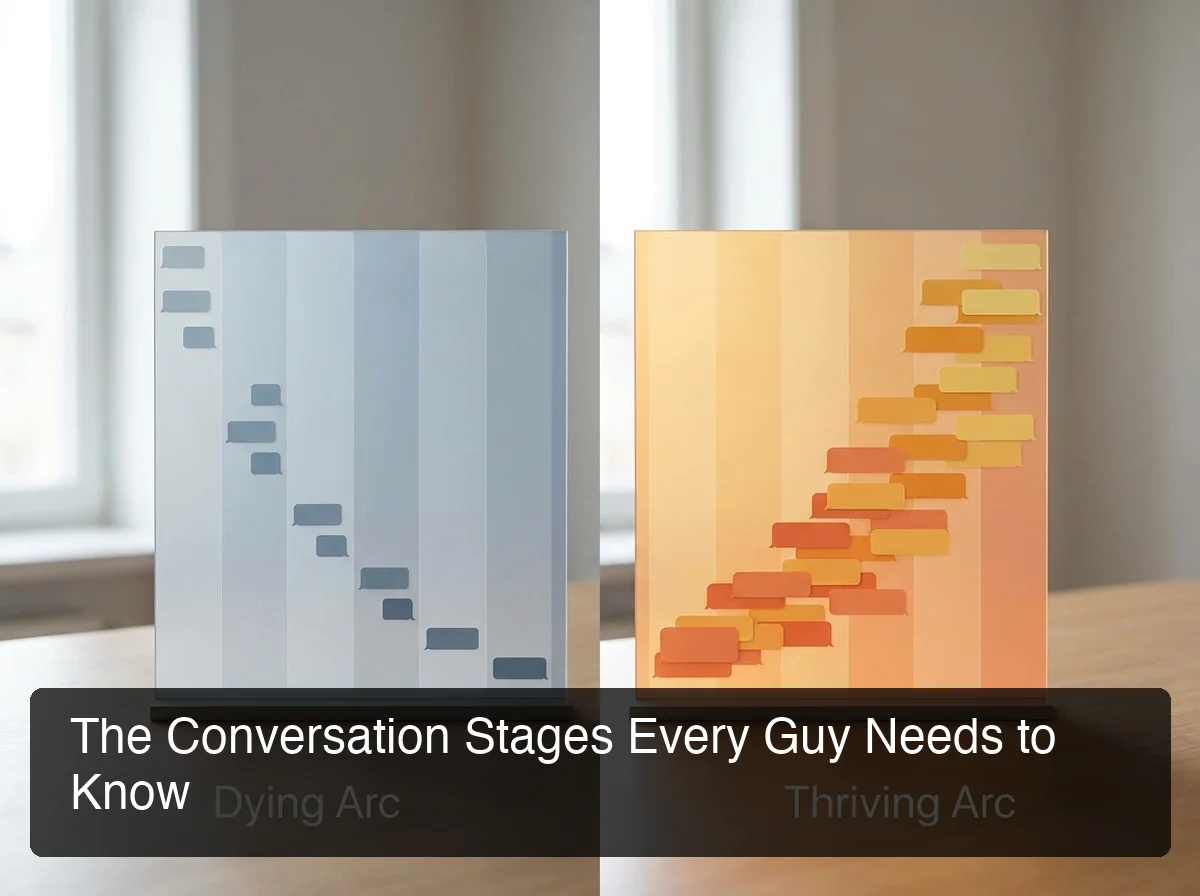 One arc dies with statements. The other stays alive because every message opens a response path.
The second version gives her a specific thing to push back on or laugh at. Even mild friction beats a dead end. The mechanism is simple: specificity invites a reply, generics don't.
How to Keep a Conversation Going Without Looking Desperate
Keeping a conversation going isn't about sending more messages — it's about sending the right type. The guys who come across as desperate double down on the energy that already stalled. The guys who keep her talking shift the register entirely.
Instead of trying harder with the same approach, use one of these:
- Open a new thread — "Completely unrelated but do you have strong opinions on airport lounges or are you a gate-chair person?" New topic, zero connection to the stall.
- Name it, lightly — "You're giving me three-word replies. Either you're driving or this conversation needs a plot twist." Confident, non-needy, opens a laugh.
- The unprompted one-liner — A single punchy observation with no ask. "Still thinking about that kayaking photo btw." She can run with it or not. No pressure, no chase.
Texting anxiety is the root of most bad recovery moves — the overthinking that produces desperate double messages comes from the same freeze SLIDD is designed to eliminate. The right move in the dead zone is almost always one confident line, not two paragraphs.
How Do You Respond When She Gives Short Replies?
Short replies are information, not rejection. They usually mean the last message gave her nothing specific to respond to, or the conversation drifted to a topic she finds boring. One-word replies almost always contain a hidden thread — your job is to find it and pull.
If she sends: "yeah lol" Don't send: "haha yeah same" Send: "That 'lol' has a story attached to it. What happened?"
If she sends: "I'm fine" Don't send: "just fine??" Send: "Fine is what people say when they're holding something specific back."
If she sends: "idk maybe" Don't send: "maybe what??" Send: "I'm counting that as a yes. Calendar event created."
Each of these works because it assumes engagement rather than asking for it. The tone is confident without being pushy — and every line gives her something specific to respond to without requiring any effort from her.
For more ready-to-use material to keep the energy alive, flirty questions covers the specific type that invites a response rather than a dead-end answer.
Does Your Tone Matter More Than What You Actually Say?
In mid-conversation, tone consistently outperforms content. The same factual message lands completely differently depending on register — Witty builds energy, Sincere creates investment, Bold moves things forward. Mismatching tone to the moment is the primary reason technically good messages still die.
SLIDD's five presets map directly to conversation stages and emotional beats:
| Tone | Best Used When | Example |
|---|---|---|
| Witty | Banter is flat, she's giving nothing | "You're really committed to giving me absolutely nothing to work with. Respect the dedication." |
| Sincere | She shares something real — a rough day, a loss, a vulnerability | "That actually sounds exhausting. Not the fun kind either." |
| Bold | You want to move the conversation forward — call, meet, escalate | "I've been stalling on this — you want to grab coffee next week?" |
| Casual | Maintaining without pressure, early stages | "What did you end up doing this weekend?" |
| Flirty | Good energy is there, she's responsive, tension building | "I had a whole response planned and then you sent that photo." |
Worth knowing: Tone-matching is what naturally good texters do without thinking. SLIDD's five presets make that instinct deliberate — you choose the emotional register, the keyboard writes to it.
What's the Best Way to Switch Up Momentum Mid-Conversation?
The fastest way to keep a conversation going is to change register before the conversation needs it. Cycling Witty → Sincere → Bold across a 20-message thread prevents the "same guy" fatigue that kills most long exchanges — each beat needs a different register to land.
A practical escalation sequence that works:
- Open Witty — Build energy, earn a laugh, establish you're not trying too hard
- Drop one Sincere — Show you notice actual things about her, not just surface details ("You mentioned Spain twice. That trip meant something.")
- Close Bold — Ask the thing you've been building toward ("I think this conversation wants to continue somewhere else")
The mistake is staying in one tone for the entire exchange. She gets the same guy on every message. Predictability is the original conversation killer — not a quiet hour, not a one-word reply.
How Long Should You Wait Before Texting Again After She's Gone Quiet?
If she went quiet mid-conversation, 4–6 hours is the right window before one low-stakes re-open. After 24+ hours, treat it as a fresh opener. The double-text is only desperate when it's more of the same — a genuinely different approach isn't desperate, it's confident.
If she went quiet mid-exchange:
- Wait 4–6 hours, then: "Completely different topic but this just made me think of you" + a specific observation or reference
- Not this: "hey you okay?" / "did I say something?" / "..."
If it's been 2+ days:
- "Haven't heard from you — what ended up happening with [the thing she mentioned]?" — shows you remember the actual conversation, not just that you want a reply
The re-open works when it proves you were listening. It fails when it proves you were just waiting.
The SLIDD Advantage: Keeping Momentum Without the Freeze
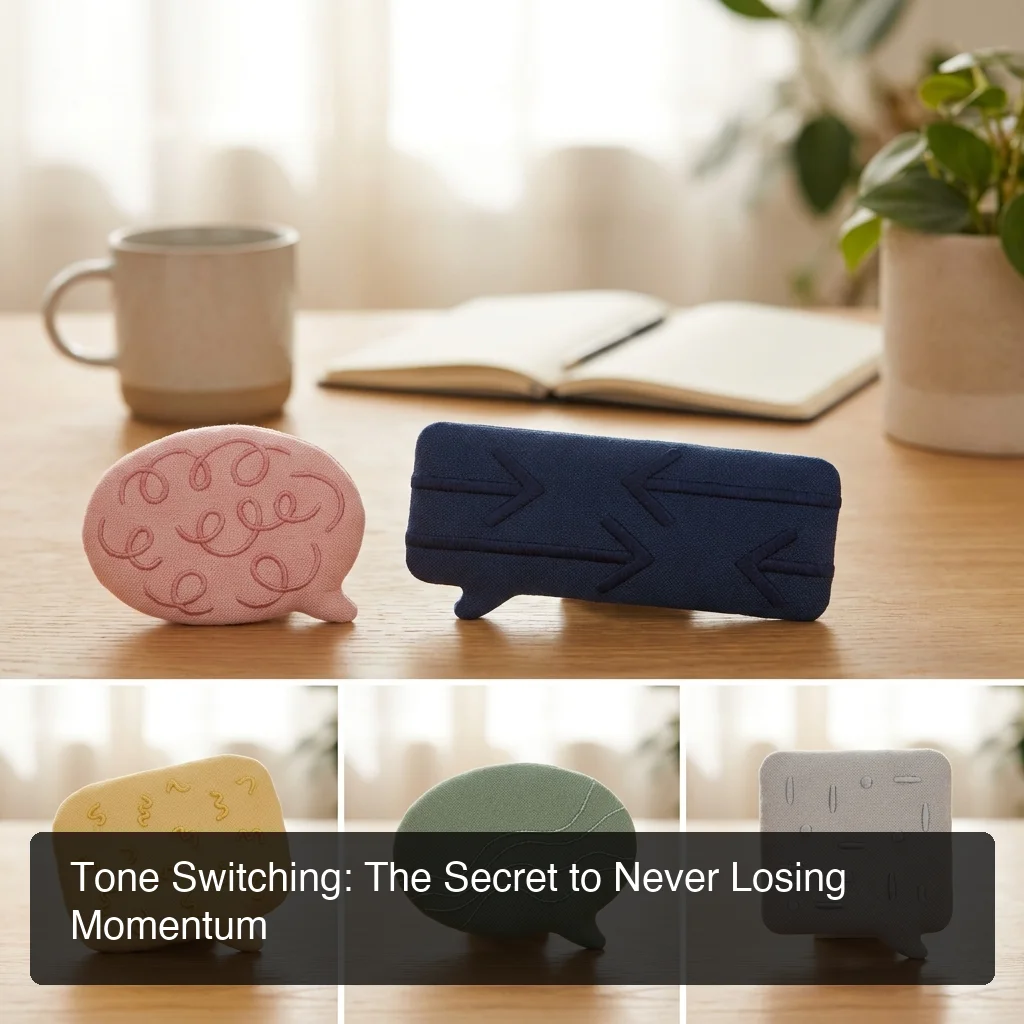 Five tones. One tap. The right reply for every conversation stage — without leaving the app.
The reason most threads die isn't lack of things to say. It's the 30-second freeze while you stare at the screen, pick something mediocre out of anxiety, and send a message that tanks the thread.
SLIDD reads the active screen — the conversation thread, her photo, the stage you're in — and writes the next reply in whichever tone you choose. No screenshots, no app-switching, no copy-paste loop.
When the thread is stalling and you tap Witty, SLIDD writes something like:
"I just noticed you've been sending me 'haha' for three messages. I'm going to need a full sentence at minimum."
When she shared something real and you tap Sincere:
"That thing about your dad. You said it like it was nothing. It wasn't nothing."
When the conversation is ready to move forward and you tap Bold:
"You've answered two questions with questions. I think that means you're interviewing me. When do I find out if I got the job?"
Each of these is ready to send. No editing, no second-guessing — the freeze is gone and the move is already there.
Can an AI Keyboard Teach You How to Keep a Conversation Going?
Yes — specifically because it removes the bottleneck. The problem isn't knowing what type of reply to send; it's the freeze, the overthinking, the safe-but-wrong message that follows. A purpose-built keyboard that reads the screen and generates tone-specific replies eliminates that entire cycle.
This is the core difference between ChatGPT for dating and a purpose-built keyboard: ChatGPT can't see the screen. You'd have to manually transcribe every message and context detail, and the replies come back generic. SLIDD reads the live screen in one tap and generates a context-aware reply calibrated to the conversation stage and tone you select.
Getting someone to reply in the first place is its own skill — opening lines on dating apps covers that stage. Keeping the conversation alive after she's engaged is where most guys drop off. SLIDD is built specifically for that moment.
Get Started with SLIDD AI
If conversation momentum is what's killing your threads, SLIDD removes the bottleneck. The keyboard reads your active screen, picks up exactly where the conversation is, and generates the right move in whichever tone the moment needs.
Not ready to download yet? Get the AI Dating Keyboard — no payment required at signup, 3-day unlimited free trial.
FAQ
How do you keep a dry conversation going?
A dry conversation usually means your last message closed the thread instead of opening one. Send a single specific observation about something she actually said — drop the stalled topic and redirect without asking permission. "Still thinking about that airports thing" beats "so what else is new?" every time.
Why do I struggle to keep conversations going?
Most guys struggle because they send statements rather than threads — every message either opens a response path or closes it. "That's cool" closes; "You went hiking but you look like you also panic-read every trail review beforehand" opens. Specificity gives her something concrete to react to, and that's the entire mechanism.
How long should I wait before texting again if she stops replying?
For mid-conversation silence, 4–6 hours is the right window before one low-stakes re-open. After 24+ hours, treat it as a fresh opener and reference something specific from your last exchange. The recovery works when it shows you were paying attention to what she said — not just waiting for a reply.
What's the right tone when a conversation is dying?
Witty is usually the right call for a dying thread — it adds energy without raising stakes. If things have been flat for several exchanges, one Sincere message that shows you noticed something specific about her can reset the dynamic. Save Bold for when you're ready to move the conversation forward, not to rescue it from a one-word reply spiral.
Is SLIDD AI free to try?
SLIDD AI offers a 3-day unlimited free trial — all five tone presets (Flirty, Bold, Witty, Sincere, Casual), unlimited replies, no payment required at signup, trial clock starts at signup not first use. Plans after that run $6.99/week, $19.99/month (most popular), or $99.99/year — all paid tiers include unlimited replies and the custom tone builder.