How to Rizz: The 5-Stage Framework | SLIDD
How to Rizz: A Five-Stage Framework for Real Conversations
Rizz isn't a line. It's a read. If you're trying to figure out how to rizz, skip the pickup-line collections — the guys who consistently keep conversations alive aren't reciting anything memorized. They're tracking where the conversation is and adjusting how they sound to match it. That's the whole skill, and it breaks down into five learnable stages.
Key Takeaways
- Rizz is the ability to navigate dating conversation stages with adaptive communication — not cheesy lines or natural charisma alone.
- The five stages are opener, mid-conversation, tension, escalation, and close — each one calls for a different approach.
- Most guys stall out because they use the same tone for every stage; real rizz means switching registers as the conversation moves.
- Five tones — Flirty, Bold, Witty, Sincere, Casual — are the tools for stage-switching, and matching tone to stage is what separates natural from awkward.
- AI dating keyboards like SLIDD automate tone-matching so you can focus on reading her, not composing the right line under pressure.
Contents
- What Does It Mean to Have Rizz in Modern Dating?
- How to Rizz in Five Conversational Stages
- Stage One: How Do You Open Without Sounding Like Everyone Else?
- Stage Two: How Do You Build Rizz in the Middle of a Conversation?
- Stage Three: How Do You Create Tension Without Being Creepy?
- Stage Four: When Does Rizz Shift From Connection to Asking Her Out?
- Stage Five: How Do You Close and Lock In the Date?
- How Do the Five Tones Work Across Every Rizz Stage?
- How SLIDD AI Handles Rizz Across All Five Tones
- How to Rizz Without Sounding Scripted or Tryhard?
- Get Started with SLIDD AI
- FAQ
 Rizz isn't one skill. It's five, stacked in order.
What Does It Mean to Have Rizz in Modern Dating?
Rizz means the ability to read where a conversation is and respond in a way that keeps it moving forward — not a fixed set of lines you memorize. The word ballooned out of slang into something guys actually search "how to" get, but the underlying skill is old: reading momentum and matching your energy to it. A guy with rizz isn't funnier or better-looking than the guy without it. He's just paying attention to what stage the conversation is in.
That distinction matters because most advice treats rizz as a personality trait — something you either have or don't. It's closer to a sport: something you can drill, lose when you're distracted, and sharpen by studying the stages instead of hunting for better openers.
How to Rizz in Five Conversational Stages
Every dating conversation that goes somewhere passes through the same five stages, whether it takes fifteen minutes or three days. Skip a stage and the conversation feels rushed. Get stuck in one and it goes flat.
- Opener — the first message, where you make an impression
- Mid-conversation — building actual connection past small talk
- Tension — introducing a playful charge that makes things feel like more than a chat
- Escalation — moving from vibes to a concrete ask
- Close — confirming the actual date, time, and place
Reality check: Most guys have one tone and run it through all five stages. That's why conversations that start strong go quiet by message six — the tone that lands as an opener reads as flat or try-hard by the escalation stage.
Stage One: How Do You Open Without Sounding Like Everyone Else?
A strong opener references something specific and complete in her profile, photo, or bio instead of a generic greeting — specificity is what separates an opener that gets read from one that gets ignored. "Hey" and "How's your day going" blend into the forty other messages she got that hour. A line built around one real detail stands out because it proves you actually looked.
Three complete openers, ready to send:
- "Your dog deserves better photos than that. I volunteer."
- "I have a theory about people who run marathons. Want to tell me if I'm wrong?"
- "Ranking your photos: the rooftop one is clearly doing the most work here, and I respect the commitment."
The tone that works best here is Witty or Flirty — something that signals playfulness without asking for much back. A Bold opener this early tends to read as aggressive before she has any context for who you are.
Stage Two: How Do You Build Rizz in the Middle of a Conversation?
Mid-conversation rizz comes from asking questions that invite a real answer instead of small talk that dead-ends in one word. This is the stage where most conversations quietly die — not from a bad opener, but from three exchanges of "haha same" that never turn into anything a person wants to keep typing about.
If she replies with something short and low-effort — "lol okay" — you've got about thirty seconds before the thread flatlines. That's the moment to shift tone, not repeat the one that got you the flat reply.
Complete mid-conversation lines that move things forward:
- "Okay but marathon training sounds like a personality trait at this point. What got you into it?"
- "Rooftop bar or the kind of place where you'd actually want to talk for two hours?"
- "I need to know if the dog is a good listener or if he judges you the way I would."
Casual and Witty do the heaviest lifting here. Casual keeps the exchange low-pressure when she's giving short replies; Witty re-energizes it when the thread needs a spark.
Stage Three: How Do You Create Tension Without Being Creepy?
Tension comes from a light challenge or tease, not from compliments stacked on top of compliments — flattery flattens a conversation, while a playful push-pull makes it feel alive. This is the stage most guides skip entirely because it's the hardest to teach: too much tension reads as negging, too little and the conversation stays friendly-flat forever.
 Tension is a push-pull, not a compliment machine.
Examples that build tension without crossing into rude:
- "I was going to say you seem too put-together to be single, but I'm starting to think that's the point."
- "You're either extremely good at conversation or extremely good at making me think you are. Jury's out."
- "Fair warning: I'm going to need you to be less charming so I can focus on my actual plans today."
What this means for you: The line between tension and rudeness is whether the joke is at her expense or shared between you both. "You're a lot" is a dig. "You're a lot, and I mean that as a compliment I'm still deciding on" is tension.
Flirty is the default tone for this stage, sometimes with a little Bold mixed in if the conversation has already established comfort.
Stage Four: When Does Rizz Shift From Connection to Asking Her Out?
The shift to escalation happens once a conversation has sustained real back-and-forth for at least a few exchanges — not after a fixed number of messages, but once the tension stage has landed at least once. Wait too long past that point and the conversation starts to feel like it's stalling in place; too early and the ask feels disconnected from what you've actually built.
The signal to watch for: she's asking you questions back, not just answering yours. That's when a Bold ask lands instead of feeling premature.
Complete escalation lines:
- "This has officially outgrown the app. There's a wine bar near Union Square that does a solid Thursday happy hour — you in?"
- "I'm free Wednesday evening if you want to find out whether you're actually this fun in person."
- "Coffee Saturday morning, or are you more of a Sunday-brunch-recovery person?"
Bold is the tone here, full stop. This is the one stage where hedging costs you — a vague "we should hang out sometime" gives her nothing to say yes to.
Stage Five: How Do You Close and Lock In the Date?
Closing means confirming a specific time, place, and logistics — not just getting a "sounds good" and letting the plan stay vague until it quietly falls apart. A lot of guys get the yes and then fumble the close by leaving details open, which is how "we should get drinks" plans die in a group chat of two.
 The ask is the hard part. The close is just logistics — don't fumble it.
Complete closing lines:
- "Perfect — Thursday at 7, that wine bar on 5th. I'll send you the address."
- "Saturday morning works. Want me to pick the coffee spot, or do you have one you swear by?"
- "Locked in. I'll text you Wednesday to confirm, but put it on your calendar."
Sincere works well right at the close — a small, genuine line ("Looking forward to this, actually") lands better here than more wit. The tension stage already did its job; the close is where you drop the game slightly.
How Do the Five Tones Work Across Every Rizz Stage?
Each of SLIDD's five tone presets maps to a specific stage of the conversation, and switching between them — not picking a favorite and sticking with it — is what makes rizz feel adaptive instead of scripted. Guys who default to one tone for every message are the ones whose conversations plateau, because a Witty opener and a Witty close don't hit the same way.
| Tone | Best Stage | What It Sounds Like |
|---|---|---|
| Flirty | Opener, Tension | Playful, a little charged, low-commitment |
| Bold | Escalation | Direct, confident, asks for something specific |
| Witty | Opener, Mid-conversation | Intelligent humor, quick, makes her laugh |
| Sincere | Close, vulnerable moments | Low-game, genuine, no performance |
| Casual | Mid-conversation | Natural, no-pressure, keeps things easy |
Quick win: If you're not sure which tone to use, match the energy of her last message rather than defaulting to your comfort tone. A short, dry reply from her usually calls for Witty or Casual — not more Flirty.
For guys who want to see tone-switching applied to specific line categories rather than a full conversation arc, our breakdown of rizz lines that actually work walks through openers by tone. And if you're wondering how AI interprets "rizz" as a concept in the first place, this explainer on AI rizz covers the mechanics behind tone-matched reply generation.
How SLIDD AI Handles Rizz Across All Five Tones
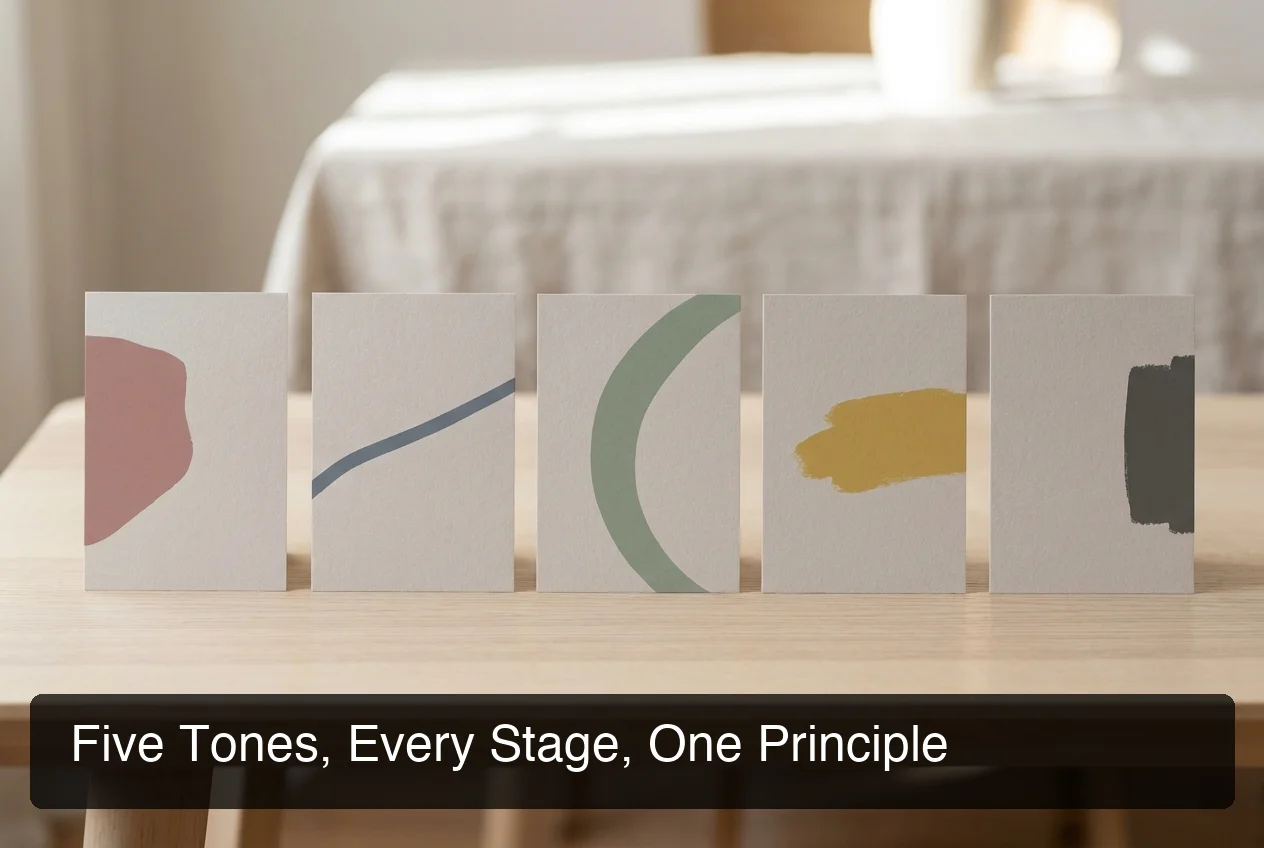 Five tones, one keyboard, zero app-switching.
SLIDD is an AI keyboard that reads your screen in real time and writes a reply in the tone that fits the stage you're in — Flirty, Bold, Witty, Sincere, or Casual — without you leaving the conversation to compose it. The framework above is the same logic SLIDD runs on: it detects whether a message calls for an opener, a mid-conversation reply, an escalation, or a close, and generates accordingly.
Tracking five stages and five tones while also reading her actual message is a lot to do in thirty seconds — exactly the moment most guys freeze. Tap Reply on the SLIDD keyboard inside Hinge, Tinder, Bumble, Instagram, WhatsApp, or iMessage, pick a tone, and it writes the line calibrated to where the conversation actually is. Coaching yourself through tone-switching works — but the five-tone SLIDD keyboard eliminates the mental load in the moment, which matters most when she's already typing back.
How to Rizz Without Sounding Scripted or Tryhard?
The line between confident and scripted is specificity — a generic compliment or a line that could apply to any match reads as copy-pasted, while a detail pulled from her actual profile reads as attention. This is the single most common way guys sabotage stage one before it even starts: they reach for a line that's technically clever but generic enough to send to anyone.
The other common mistake is staying in one tone too long — ten straight Witty messages starts to feel like a bit, not a real exchange. Dropping into Sincere or Casual for one line resets it. A third failure: escalating before tension has landed. Asking her out right after a solid opener skips three stages and reads as impatient, even when the intent is genuinely just direct.
Bottom line: Scripted rizz sounds the same in every conversation. Real rizz changes shape depending on who you're talking to, because it's built from her actual messages, not a saved list of lines.
If you want more openers built the same way — specific, complete, ready to send — our guide to rizz lines that actually work has line-by-line breakdowns for every stage covered here.
Get Started with SLIDD AI
Reading five stages and switching between five tones is a real skill — and it's also exactly the workflow SLIDD automates. Tap Reply on any dating app or DM, pick the tone that fits the moment, and skip the thirty-second freeze entirely.
FAQ
What's the fastest way to get better at rizz?
Study the five stages instead of memorizing lines — opener, mid-conversation, tension, escalation, and close each need a different tone. Guys improve faster by matching tone to stage than by collecting more openers, since the same three lines fail the moment the conversation moves past stage one.
Is rizz something you're born with, or can you learn it?
Rizz is closer to a learnable skill than a fixed trait — it's pattern recognition (reading conversation momentum) plus execution (adjusting your tone to match). Some people pick up the pattern faster from experience, but the five-stage framework works the same way regardless of natural charisma.
What's the difference between rizz and just being funny?
Being funny is one tool inside rizz, not the whole thing. A guy who's only funny can nail the opener and mid-conversation stages but stall at escalation, where Bold — not Witty — is what actually moves things toward a date.
How does SLIDD AI help with rizz specifically?
SLIDD reads your screen in real time inside apps like Hinge, Tinder, and Instagram, then writes a reply in one of five tones — Flirty, Bold, Witty, Sincere, or Casual — matched to the stage the conversation is in. It replaces the eight-step screenshot workflow other tools require with a single tap.
Can rizz be different in text versus in person?
Yes — text rizz relies more heavily on specificity and timing since you lose tone of voice and body language, while in-person rizz leans on delivery and confidence. The five-stage framework applies to both, but text gives you more time to think through which tone fits, which is part of why AI-assisted replies work well there specifically.
Do the five tones work outside of dating apps?
Yes. The same stage logic applies to Instagram DMs, Stories replies, WhatsApp, and iMessage — anywhere a conversation moves through opener, connection, tension, escalation, and close. SLIDD works across all of these apps because it's a system keyboard, not a dating-app-only tool.