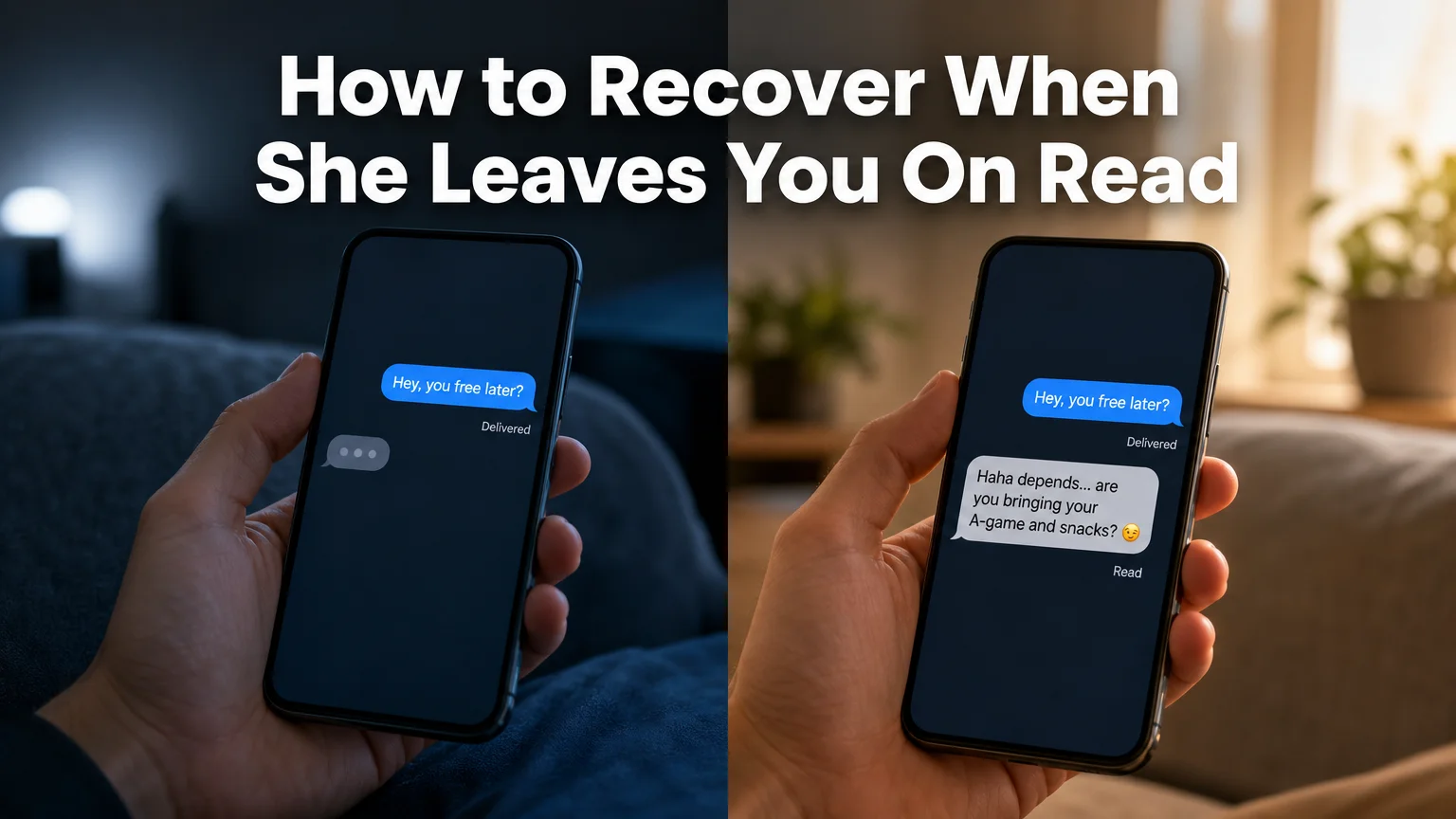
Left on Read: What It Means & How to Recover
Left on Read: What It Means and How to Get the Conversation Back
Three dots appear, then vanish. The timestamp under your last message ticks past four hours, then nine, then a full day. You've been left on read, and now you're doing what every guy in this spot does: reopening the thread like it might say something different the second time you check.
Here's what the silence actually means, and what to send once you're ready to try again.
What Does 'Left on Read' Actually Mean?
Left on read means the other person opened your message and the read receipt confirms it, but hasn't replied yet. It's a status, not a verdict — the receipt shows she saw the words, not what she thought of them or when she'll respond.
Read receipts turned an invisible pause into a visible one. Before apps started stamping "Read" under a bubble, a slow reply just felt normal. Now the gap between sent and seen gets a timestamp, and that timestamp does most of the emotional heavy lifting.
A few things left on read is not:
- A guaranteed rejection
- Proof she's already texting someone else
- Confirmation you said something wrong
Why Conversations Actually Die Before They Get Left on Read
Most left-on-read moments don't come out of nowhere. They're the tail end of a pattern that usually starts three or four messages earlier, when the energy quietly starts leaking out of the thread.
The pattern is consistent enough that it has a shape: a specific opener, a couple of strong exchanges, then replies that get shorter, slower, and more generic until one side stops matching the other's effort. Here's what that fade typically looks like across a six-message stretch:
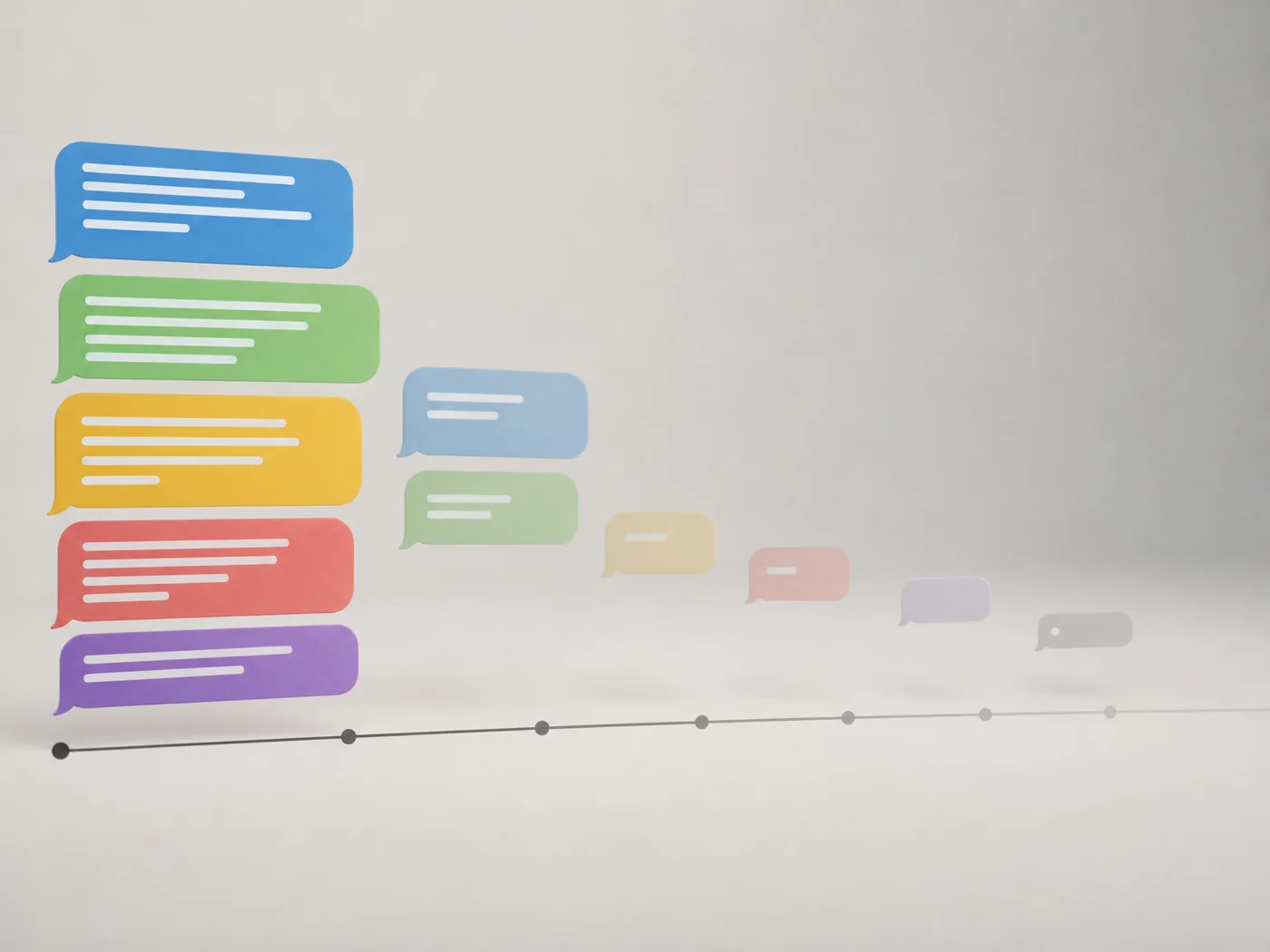 Energy tends to leak out gradually, not all at once — which is why the last message rarely explains the silence.
- Messages 1-2: specific, high-energy opener and reply
- Message 3: first flat, low-effort reply
- Message 4: response time slows from minutes to hours
- Message 5: one-word or emoji-only reply
- Message 6: sent, read, silence
Catching the fade before message four is the real skill — see our breakdown on how to keep a conversation going for what to do in the messages before the silence, not just after it.
Is Being Left on Read a Sign She's Not Interested?
Being left on read is not reliable evidence she's not interested — it's more often a signal she's busy, distracted, or unsure what to say next than an outright rejection. Interest and reply speed are only loosely connected; plenty of women who are genuinely into a conversation still let it sit for a day.
Reading between the lines of her silence is tempting, but a read receipt alone doesn't carry enough information to draw a conclusion. Context matters more than the gap itself: how the conversation was going before she went quiet, what time it happened, whether she's historically a fast or slow replier.
Worth knowing: A slow reply and a dead conversation are different problems. One just needs patience; the other needs a genuinely new angle, not a follow-up to the same fading thread.
How Long Should You Wait Before Texting Again After Being Left on Read?
Wait long enough that your next message reads as unbothered, not anxious — for most left-on-read situations, that's somewhere between a few hours and a full day, depending on how the conversation was going before it stalled. Texting again inside the first hour almost always reads as pressure, no matter how casual the message is.
The exact number matters less than what it signals. A text sent ten minutes after being left on read says "I noticed, and it bothered me." The same message sent eight hours later says nothing about how you spent those eight hours, which is the point.
A rough guide:
- Conversation was going well, one skipped reply: later that same day
- Multiple skipped replies in a row: 24-48 hours, and change the angle
- No reply for several days: treat your next message as a fresh opener, not a follow-up
The Recovery Reply Strategy
The message that restarts a stalled conversation isn't the same message that started it. It needs to acknowledge the gap without apologizing for it, and land with more confidence than the original opener, not less.
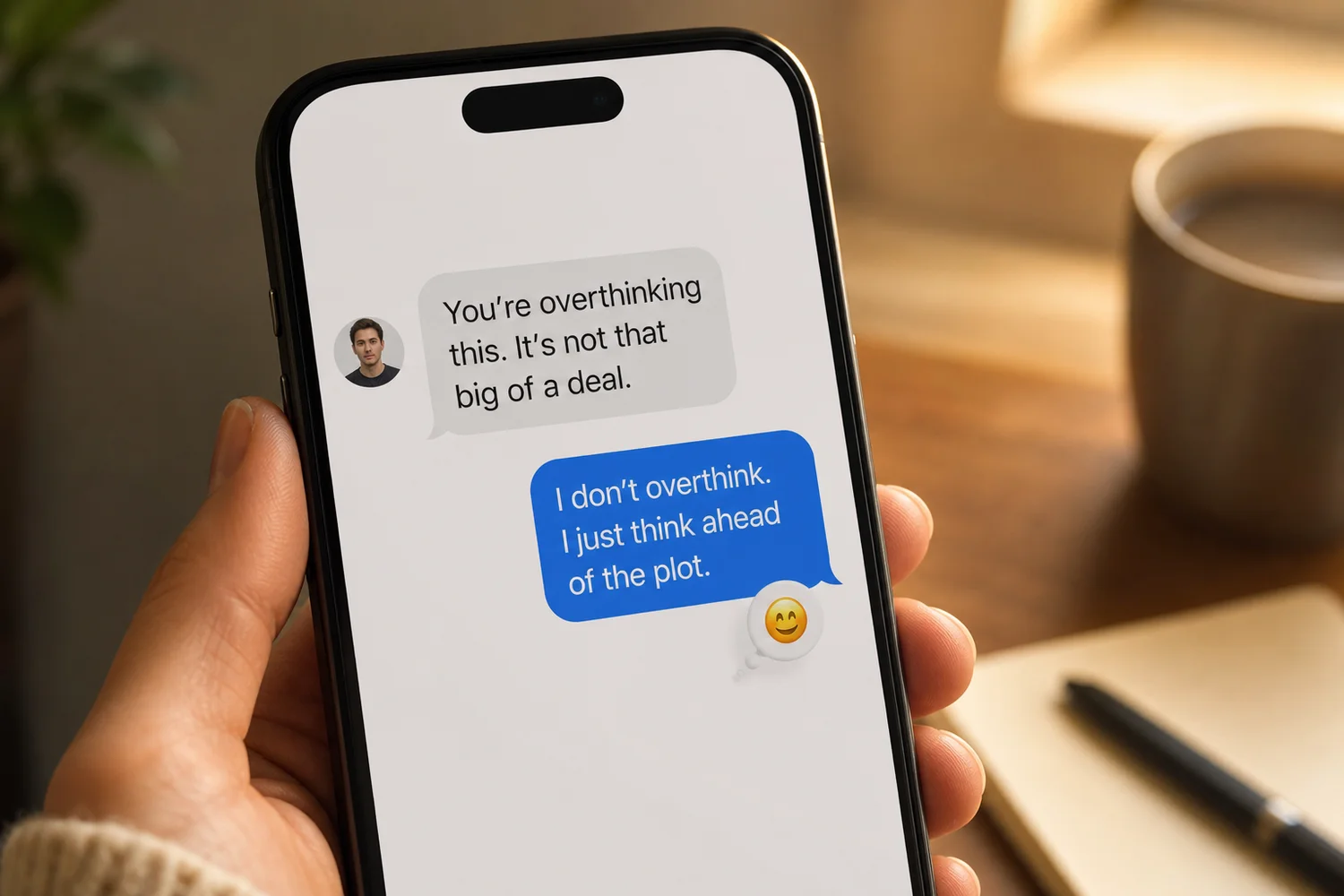 Timing gets a conversation restarted. Tone is what makes it stick.
This is the moment where tone matters more than timing. A recovery text that's too eager reads as chasing; one that's too cold reads as indifference. The right recovery message sits in the middle — confident, specific, and easy to reply to.
This is also exactly the gap SLIDD AI's keyboard is built for. It reads the actual thread on your screen, including how long it's been quiet, and writes a reply in one of five tones instead of leaving you to stare at a blank text field guessing which tone even fits. Think of it as a wingman AI dating coach for the one moment your actual friends can't see over your shoulder — the reply gets written directly in your keyboard, in whatever tone the situation calls for, before the moment passes.
Each tone reads a stalled conversation differently:
| Tone | When It Fits a Recovery Text | Example You Could Actually Send |
|---|---|---|
| Witty | Normal exchange, no real tension to repair | "You disappeared right when I was about to ask if you're actually good at trivia or just good at bragging about it." |
| Bold | Conversation was going well and you want to move it forward, not just restart it | "I'll take the pause as you needed a minute. Dinner Thursday — yes or no?" |
| Sincere | The silence followed something real or vulnerable | "No pressure to reply fast — I just didn't want this to fade without saying I'm still into where it was going." |
| Casual | You want zero pressure and a low-stakes reason to pick back up | "Life happens. Whenever you're back, I've got a much better question than the last one." |
| Flirty | The energy before the pause was already playful | "Took you long enough. I was starting to think you needed time to recover from that last text." |
Every line in that table is ready to send exactly as written — that's the point. You can try SLIDD AI free for three days and see which tone gets your specific conversation moving again, without filling in a single blank yourself.
Left on Read Looks Different on Hinge, Tinder, and Instagram
The platform changes the read-receipt math. Hinge and Tinder show clear read states inside a match thread, so a left-on-read moment there is unambiguous — she opened it, the timestamp updates, and that's the whole signal.
Instagram is messier. A story reply can sit unread in message requests for days, or get read and ignored in an otherwise-active DM thread. Recovery on Instagram Stories and DMs often means re-engaging with a new story instead of following up on the old message directly.
If the read-and-silence happened right after your opener rather than mid-conversation, the fix is usually a full restart rather than a follow-up. Pulling from a fresh angle, the way our guide to best Hinge openers breaks down, tends to work better than referencing a message she already skipped.
The mechanics of how to restart a texting conversation stay close to identical across apps — new angle, right tone, no reference to the gap — but Instagram and iMessage give you more room to use timing, like a story reply, that a dating app thread doesn't.
Quick recap
- Being left on read is a signal, not a rejection — she saw your message, and her silence usually means "I'm busy" or "I need a minute," not "no."
- The six-message fade is real: conversations rarely die in one message, they lose energy gradually until one side stops matching the other's effort.
- Recovery needs a specific tone — something that acknowledges the gap without sounding needy, confident without sounding pushy.
- Reply speed matters less than reply quality: a clever message sent three hours later beats an anxious "hey?" sent in ten minutes.
- The strongest recovery texts read the actual situation instead of reusing a generic line, which is exactly what SLIDD's tone presets are built to do.
Get Started with SLIDD AI
A recovery text only works if it lands in the thirty seconds you actually have before the moment passes, not twenty minutes later after three rewrites. SLIDD AI reads what's on your screen and writes that reply in Flirty, Bold, Witty, Sincere, or Casual, right inside Hinge, Tinder, Instagram, or iMessage.
FAQ: Being Left on Read
What does it mean when someone leaves you on read? It means they've opened your message — the read receipt confirms it — but haven't replied. It's not automatically a rejection; it usually means they're busy, distracted, or unsure how to respond in the moment, not that they've lost interest in the conversation.
Is being left on read a red flag? Not on its own. A single skipped reply is normal — schedules, notifications, and distraction explain most of it. It becomes a real red flag only when it repeats as a pattern across several conversations, or when it follows a clear ask like setting up a date.
How long should I wait before texting again after being left on read? A few hours to a full day, depending on how the conversation was going before it stalled. Texting again within minutes usually reads as pressure. Waiting longer than a couple of days without a new angle means treating your next message as a fresh opener, not a follow-up.
Can SLIDD AI help me write a recovery text after being left on read? Yes — SLIDD AI is an iOS keyboard that reads whatever is on your screen, including a stalled thread, and writes a reply in one of five tones: Flirty, Bold, Witty, Sincere, or Casual. You tap Reply inside the conversation, with nothing to copy, paste, or screenshot.
Does SLIDD AI work on Hinge, Tinder, and Instagram? Yes. SLIDD works inside every major dating app — Hinge, Tinder, Bumble — plus Instagram DMs and Stories, WhatsApp, and iMessage, because it's a system keyboard rather than a separate app. It reads whichever screen is open and writes the reply there.